
During Vlad the Impaler’s lifetime, the Ottoman Empire was expanding at its height. In 1453, Sultan Mehmed II conquered Constantinople, sending shock waves to Christian Europe. In 1459, Pope Pius II called for a crusade to stop the ottomans and free the Balkan Peninsula. The most powerful European kings, emperors, dukes, voivodes answered yes to the calling, but nobody other than Vlad raised to the Pope’s expectations. In 1461 he attacked the ottomans in the South of the Danube, making the Sultan raise the second biggest army against him, after the fall of Constantinople. In 1462 Vlad found himself alone in the fight against the ottoman might, that crossed Danube into Wallachia. The Sultan wanted to kill Vlad and transform Wallachia into an ottoman province. Vlad raised the big army and applied a scorched earth tactic, weakening the ottoman army. Also, he conducted the famous night attack upon the Ottoman camp near Targoviste and applied psychological pressure on the ottomans who were scared of his forest of the impaled. The Sultan had eventually to turn East and back to Adrianopol, retreating in military defeat.
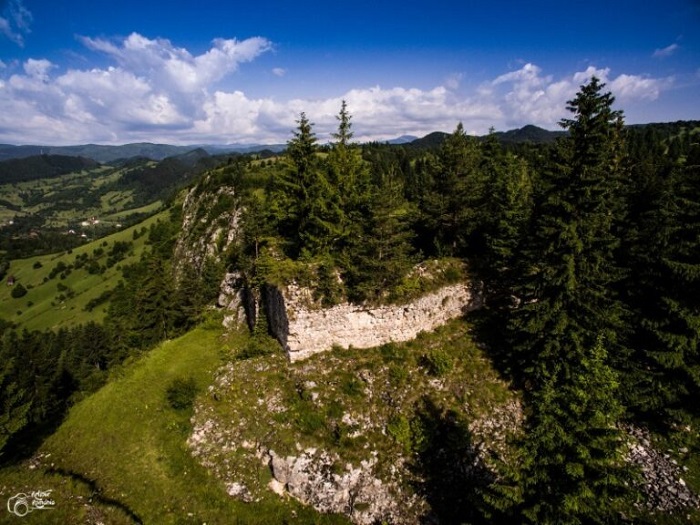
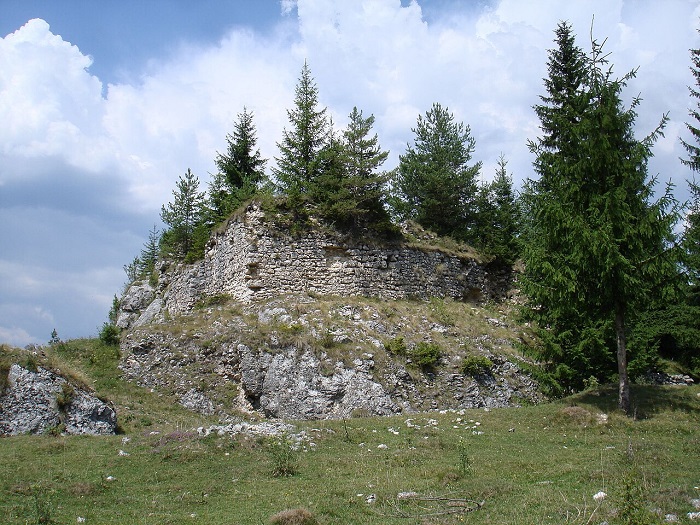
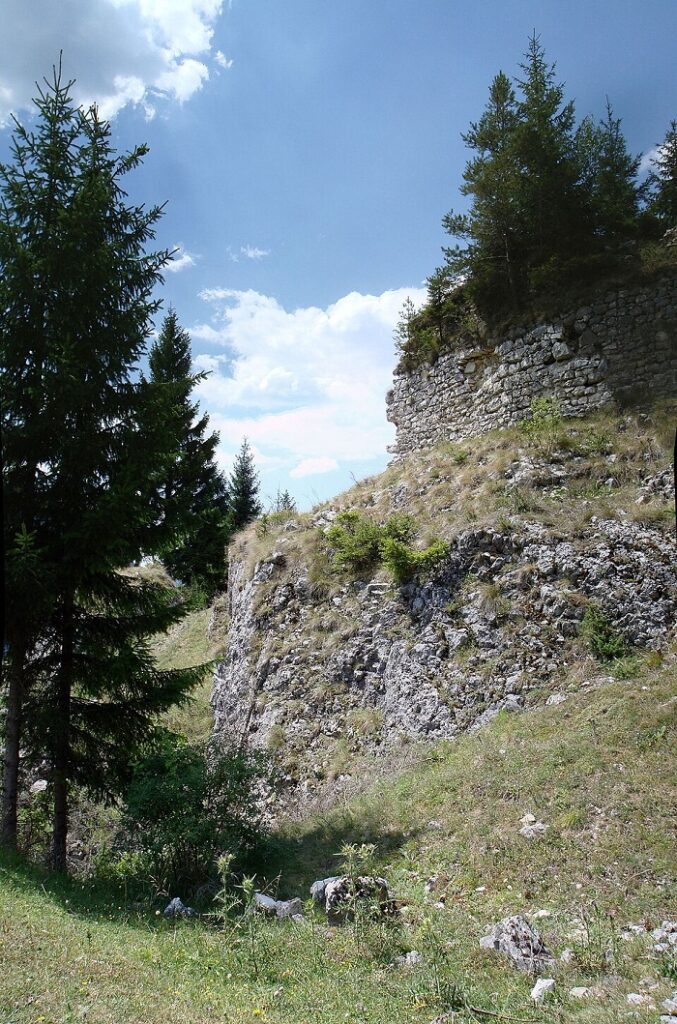
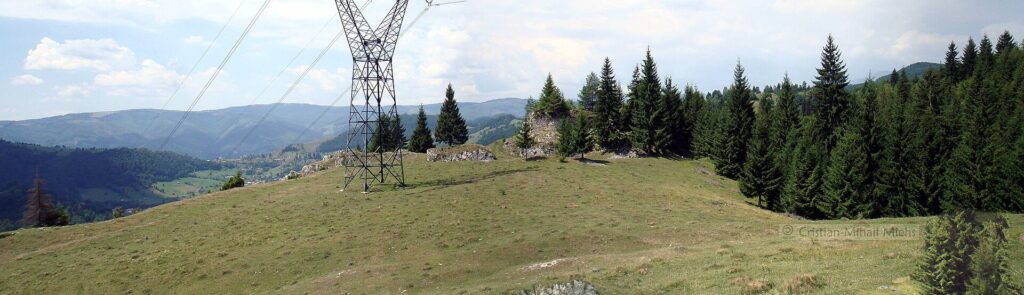
After Sultan Mehmed II left Wallachia, Vlad went to Brasov to meet his “ally” King Matthias of Hungary. In November 1462 the King had Vlad arrested by the hussites led by Captain Jan Jiskra, near Oratia Fortress, also referenced by historians as Piatra Craiului Castle or Kungstain Castle, on the road from Bran in Transylvania to Rucar in Wallachia. Vlad’s arrest in November 1462 remains one of the biggest mysteries in medieval Romania and can only be explained by logical deductions and some officially documented statements:
- King Matthias had no interest to fight the ottomans and used the money he received from the Pope to raise an army, for his personal needs; also, he did not want Vlad to become the leader of the Christian world; to justify the arrest, he used fake letters that were presumably written by Vlad for the Sultan, where Vlad was sorry to raise against the Sultan and promised to help catch the King of Hungary.
- Before leaving Wallachia, Sultan Mehmed II left Vlad’s younger brother, Radu the Handsome in Wallachia, to negotiate with Vlad’s boyars to change sides. What military force couldn’t do, politics succeeded and Vlad’s boyars turned to Radu, to avoid more battles with the ottomans. Radu was also recognized in the same year by King Matthias as ruler of Wallachia.
- The public opinion was influenced against Vlad by the German stories about Vlad “demonic” actions, written by the Saxons living in Brasov and Sibiu. These were Vlad’s enemies during 1456 – 1460. Vlad punished the Saxons for harboring pretenders to the Wallachian throne (Dan III and Vlad the Monk) and for not obeying his economic protectionist rules favoring Wallachian trade.
It is these German stories/narrations that, with help from the invention of the printing press, spread in Europe, becoming the first international best sellers. The name of Dracula was largely attributed to Vlad making it appealing to interpretations and subject of further literature. With propaganda and bad PR, Vlad was transformed from a great and just ruler, with a very sharp mind, developed spirit of justice, great defender of his country and of Christianity, and enemy of the Ottomans, into a name symbolizing the Devil, thirst for blood and a traitor of Christianity.
As Vlad was defeated in November 1462 by his own “allies” at Oratia fortress, the name Dracula started to be widely promoted and spread through the printing press and story excitenment, up until Bram Stoker decided to give this name to his famous Count. As a strange similarity, Count Dracula is also defeated in the famous novel, in the month of November.
R, Founder of Dracula Map
———————————–
Mircea Dogaru is meticulously explaining in his 1994 book, “Dracula. Myth and Historical Reality” the events surrounding Vlad’s arrest:
In the year 1462, at the moment of the arrest of Prince Vlad Țepeș, his nickname “Dracula” was respected throughout the Christian world and feared in Constantinople, as a war name designating the bold ruler who, standing alone against the ambitions of Sultan Mehmed II (the conqueror of Constantinople), had inflicted upon him a stinging military defeat, causing the entire structure of the Ottoman offensive strategy on the European theater of operations to collapse. His merit was all the greater as, urged by the Pope, some even paid—such as Matthias Corvinus, King of Hungary—the dukes, princes, and Christian kings, led by the Holy Roman Emperor, had failed for three years after the call to crusade launched at Mantua in 1459 to do anything concrete. Only Vlad, alone among all Christians, had risen to expectations, performing “great deeds against the Turks.”
It was not arms, but the intrigues of his brother Radu—initially called, out of respect for the deeds of their father Vlad II Dracul, also “Dracula” or “Dracul the Younger,” and later, to distinguish him from the brave Vlad Dracula with whom he could not compare himself, known as Radu the Handsome—that deprived him of the army’s support and forced him to leave for Hungary. From this moment the sources become contradictory, for the principal party interested in distorting the truth was none other than the King of Hungary himself, Vlad Țepeș’s relative by marriage.
Not only the Romanian Lands, but also the Pope and all of Europe awaited Matthias’s intervention in support of Vlad. As his father, John Hunyadi, had done for 15 years, from 1442 to 1456, at every moment of danger for Wallachia, situated “on the front line” as an advanced bastion of Christianity against the Ottoman offensive. As Sigismund of Luxembourg and the Voivode of Transylvania, Stibor, had done decades earlier, in 1395–1396, in support of the great Voivode Mircea, Vlad Țepeș’s grandfather. For the peoples along the Danube had learned from Balkan experience that only united could they resist the common Ottoman threat.
And yet…
Following the pathetic appeals of all Christendom, on March 4, 1462, Matthias assured Petru de Thomassiis that he would support Vlad Țepeș with his entire army. Antonio Bonfini knew that “the King said he was going to Wallachia to free Dracula from the hands of the Turks.” In contrast, the author of the Slavic “Tale,” who gathered his information in Buda, firmly supported the opposite idea: “Once the Hungarian king Matthias set out with his army against him.” In any case, the royal army did not move until Mehmed II had left Wallachia and the internal political situation had turned unfavorably for the victorious Vlad. The reasons are those already analyzed. Matthias had a rival for the Hungarian throne and then for the imperial throne in the person of Frederick III. He had accepted the idea of a crusade for political calculation, to increase his popularity in Europe and gain Rome’s support. But he used papal donations for his own interest. He was not enthusiastic about entering into battle against Mehmed II in the south, risking loss of control in Hungary while his rival “covered” his rear.
Thus, after mobilizing the army, he chose the path of expectation, approaching the theater of operations only after the conflict had ended, in order to negotiate with whoever could guarantee the preservation of the status quo on the Lower Danube, where he de facto held the rich fortress of Chilia, so desired by the Ottomans. By early August 1462, he had already secretly chosen his partner in the much more convenient Radu the Handsome, who was presented to the people of Brașov on August 15 as “voivode of the transalpine parts,” not sovereign lord of Wallachia, but merely voivode, considered a vassal by the King of Hungary.
Once the decision was made, while still in Szeged, Matthias acted, keeping his intentions secret, as Bonfini states: “Setting out there, for reasons unknown and unexplained to anyone, he captured Dracula in Transylvania.” The Prince of Wallachia had left Poenari fortress, his main base of operations, intending to join, according to his commitments, the one he considered his ally, more powerful relative, and hierarchical leader of the “crusade” against the Ottoman Empire. Matthias Corvinus could not eliminate Vlad by assassination without irreparably compromising himself, since Vlad had come alone to his camp at Brașov, where he was recorded on November 20, 1462.
Apparently, Matthias cooperated at first, giving Dracula the vanguard formed of Hussite detachments. As refugees and enemies of the Holy Roman Emperor, the Hussites and their leader Jan Jiskra were entirely dependent on their host king, which explains why Matthias entrusted them with the mission of destroying Vlad. At that time, the idea of capture had likely taken shape. Assassination would have been difficult to justify; preventive arrest on suspicion of treason could be explained.
On November 26, 1462, the expedition was canceled. “Dracula was stopped,” and amid confusion and general indignation, Radu the Handsome was recognized as ruler, according to Bonfini. A short clash likely took place near the fortress of Kungstain (Piatra Craiului), not far from Rucăr. Then, Vlad returned towards Brașov as a prisoner.
The Launch of the Anti-Dracula Campaign
Within a week, Vlad was returning as a captive along the road to Brașov, likely suspecting what awaited him. By the secret order of the king—who, before his own nobles and captains, many sincerely resolved to support the Christian hero, sought to play the role of impartial judge—the Saxon leaders unleashed a directed wave of calumny. Once imprisoned, Vlad could no longer defend himself.
The terrifying stories circulated orally among the Saxons about the deeds of “Dracula” were written down, expanded, and spread in the German-Hungarian urban environment, then synthesized and disseminated in European intellectual circles with royal authority. Not by chance, humanist diplomats and historians introduced them with cautious formulas: “It is said that…” or “It is told that…”
Thus began a propaganda campaign. From a real historical character, a fantastic character was constructed. Printers and engravers brought out editions of these narratives in Nuremberg (1488), Lübeck (1488), Bamberg (1491), Leipzig (1493), Augsburg (1494), Strasbourg (1500), and elsewhere. Vlad the man receded into the background; “Dracula the Devil” became a fashionable literary subject.
In response, the Slavic world circulated the manuscript “Skazanie o Dracula Voievoda,” known today from the copy made by the Russian monk Euphrosin, preserving a more ambivalent image.
Accusers and Defenders
The German narratives, shaped by Saxon merchants whose commercial interests Vlad had limited, presented anecdotal stories with dramatic content, suited to an era accustomed to public cruelty. These accounts were collected, enriched, and directed toward total defamation by literati in the service of Matthias Corvinus. Even after Vlad’s reconciliation with Matthias, his renewed participation in anti-Ottoman campaigns in 1476, and his death as a martyr of Christianity, the echo of these stories could not be silenced. The printing press amplified them. A real prince had become a literary devil.
The Area of Calumny
The campaign attacked both the deeds and the person of the voivode. The successive accusers—Saxon merchants (for economic interests), pretenders to the throne (for rivalry), Ottomans (for revenge), and Matthias Corvinus (for political calculations)—focused on several directions:
– Dracula as a name meaning Devil
– The cruel tyrant, thirsty for blood and wealth
– The “traitor” of Christianity
– The distortion of his acts of justice
– The denial of his qualities as brave commander and crusader
Rehabilitation and Renewed Attacks
Vlad’s release from prison in 1475 because of the rising Ottoman danger, the renewal of alliance through Stephen the Great, and his later campaigns required a revision of the German narratives. Paid writers softened their tone, suggesting that “Dracula” had changed because he had received the grace of Catholic baptism. The rumor of his conversion to Catholicism, used to justify his political rehabilitation in 1475, stirred strong emotion in Wallachia. The Slavic author responded sharply, portraying him as weak and misguided. Yet this conversion remains problematic; Romanian tradition does not confirm it, and Western sources did not insist on it.
For 16th–17th century scholars lacking authentic sources, the starting point remained the printed synthesis fabricated in Buda—its truth questioned, but its outline influential—emphasizing Vlad’s dignity as a great ruler, intelligence, bravery, sense of justice, and steadfast opposition to the Ottomans.
Sources:
- Mircea Dogaru, “Dracula. Myth and Historical Reality,” Editura Ianus, 1994.